As an Amazon Associate, we earn from qualifying purchases. Some links may be affiliate links at no extra cost to you. Although our opinions are based on curated research, we haven't used these products. Articles generated with AI.

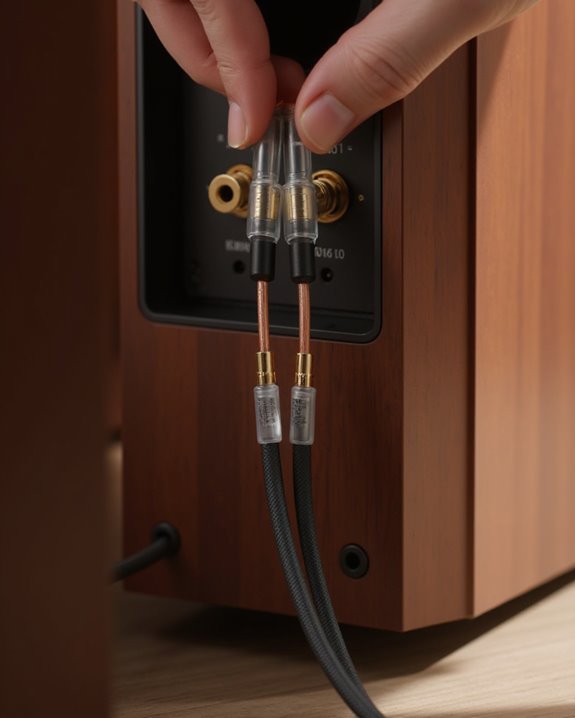
How To Bi Wire Speaker Cable

Bi-wiring speakers requires compatible equipment with dual binding posts and two sets of identical speaker cables. First, remove the metal jumper plates connecting the terminal pairs on each speaker. Then, connect one cable pair to the amplifier’s terminals and the speakers’ bass (low frequency) posts, and connect the second cable pair to the same amplifier terminals and the speakers’ treble (high frequency) posts. Maintain proper polarity (red-to-red, black-to-black) throughout all connections and separate cables by at least four inches for best performance. The following guide offers detailed procedures for achieving cleaner sound with enhanced clarity.
Key Takeaways
- Remove the factory metal jumpers between the speaker’s binding posts to separate bass and mid/high frequency crossover networks.
- Connect two identical pairs of speaker cables from your amplifier to both sets of binding posts on each speaker.
- Maintain consistent polarity by connecting red terminals to red and black to black on both the high and low frequency posts.
- Keep the bass and mid/high frequency cables separated by at least 4 inches to minimize electromagnetic interference.
- Power off all equipment before installation and ensure all connections are secure without stray wire strands that could cause shorts.
How To Bi Wire Speaker Cable
Bi-wiring speaker cables begins with a critical examination of the speaker’s rear panel, where enthusiasts should identify two separate sets of binding posts—one typically designated for low frequencies and another for mid/high frequencies. Once verified, the factory-installed metal jumpers connecting these terminals must be removed, effectively separating the crossover networks for independent signal paths.
The procedure requires two identical sets of speaker cables, matching in brand, model, and length, to maintain sonic consistency. Each amplifier output connects to both the bass and mid/high binding posts on the corresponding speaker, with careful attention to polarity—connecting red terminals to red and black to black throughout the system. For maximum performance, many audiophiles implement shotgun bi-wiring, physically separating the two sets of speaker cables by at least four inches to minimize interference between current flows.
Recommended Products

Canare 4S11, 14 AWG per conductor (11 AWG when paired) eliminates EMI noise, High damping cable is a top of the line solution for super-durable (flexible even at 0°F) speaker cables. Low Capacitance & Resistance are ideal for non-coloration of your signal.

Quick and easy installation for connecting a speaker to an A/V receiver or amplifier with banana plug style ports; Precision bolted interior banana plug terminations create a secure connection and a convenient alternative to cutting and terminating speaker wire with banana plugs *Package includes 1 cable*
Understanding Bi-Wiring: Basic Concepts and Benefits
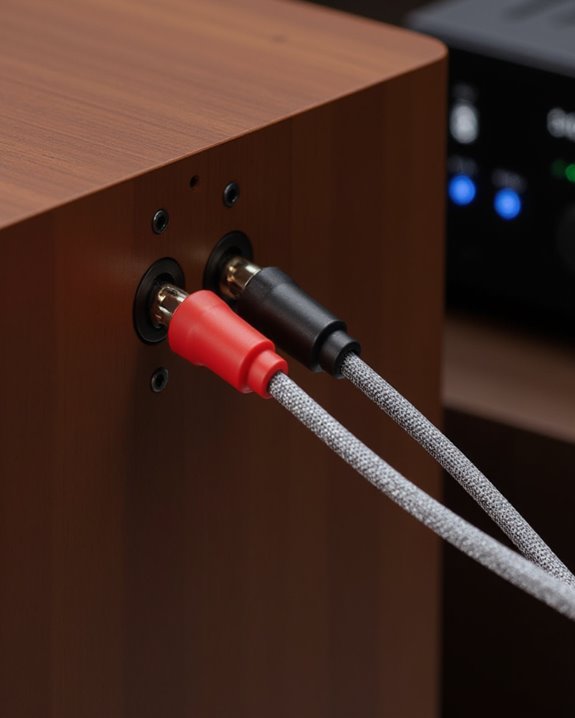
The concept of bi-wiring represents a significant advancement in speaker connection methodology, offering audiophiles a technique to maximize sound quality without necessarily upgrading their entire system. When you bi-wire your speakers, you separate bass signals from midrange/treble frequencies, utilizing two identical sets of cables connected to dedicated speaker terminals, which minimizes potentially harmful electromagnetic interactions between different frequency ranges.
The benefits of this approach are substantial and well-documented by users who report improved clarity, more precise imaging, and tighter bass response. Speakers designed with dual binding posts are specifically engineered to take advantage of this configuration, allowing each frequency range to travel through its own dedicated path. For best results, experts recommend keeping the cables physically separated by at least four inches to further reduce interference, maximizing the three-dimensional soundstage many listeners prize.
Identifying Bi-Wire Compatible Speakers
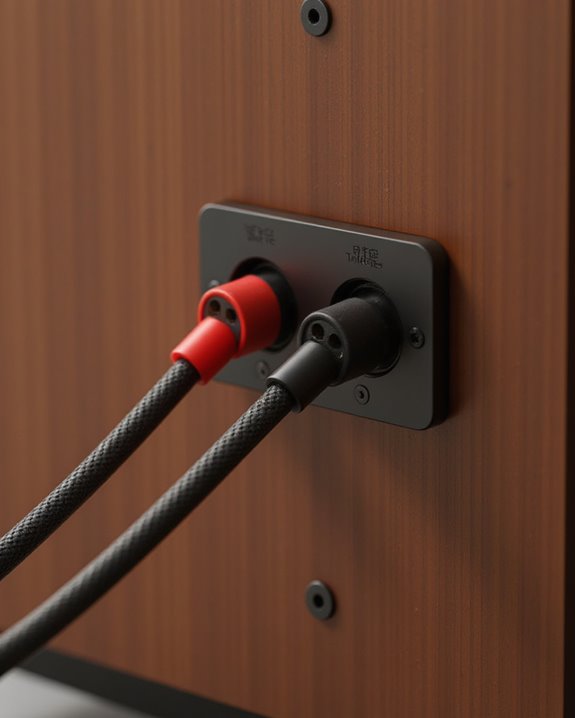
Before attempting to bi-wire speakers, audiophiles must first determine whether their equipment supports this advanced connection method, as not all speakers are designed with bi-wiring capability. The most obvious indicator is the presence of two sets of binding posts on the rear panel, typically consisting of four terminals that allow separate connections for bass and treble frequencies.
Removable jumper cables between terminal sets offer another clear sign of bi-wire compatibility, as these metal bridges can be removed to enable independent wiring. When examining potential speakers, look for these distinctive paired terminal arrangements, which manufacturers often highlight in product documentation. Conversely, speakers featuring only a single set of positive and negative terminals cannot support bi-wiring, regardless of speaker wire quality. For confirmation, check if the terminal sets can be independently connected to different amplifier outputs.
Recommended Products

Recessed mount speaker terminal with two pair of gold plated binding posts

【1 Channel Speaker Box Terminal Cup Size】Cutting diameter: 2.75 in, Outer diameter: 3.75 in, Bolt diameter: 5/16 in, length: 1.57 in. Reliability stainless steel speaker box terminal for diy subwoofer box and speaker

Ideal for DIY speakers and subwoofer boxes
Essential Equipment and Cables for Bi-Wiring

Setting up a proper bi-wiring configuration requires specific equipment beyond standard speaker connections, with the right cables serving as the foundation for achieving ideal sound separation. When preparing to set up for bi-wiring, audiophiles must use two identical cable sets of matching brand, model, and length to guarantee consistent signal transmission across frequency ranges.
High quality, pre-terminated cables with banana and spade connectors prevent stray wire strands from causing shorts while providing secure connections. Stock jumpers should be replaced with dedicated bi-wire options, such as Audioquest PSC BiWire jumpers, for noticeable sound quality improvements. For ideal performance, select appropriate gauge cables, with 8-gauge options like the Amazon CESS-138 Banana Jumper cables reducing resistance and enhancing signal clarity in sophisticated bi-wiring arrangements. To further optimize setups with advanced speakers, incorporating bi-wiring can complement features like Hi-Res Audio for superior audio processing.
Recommended Products
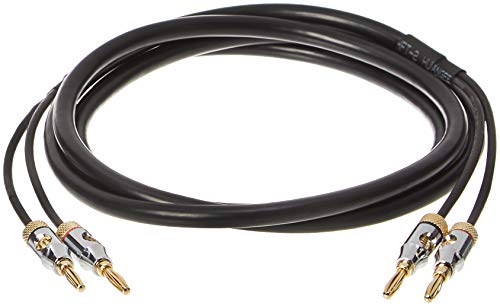
6 foot audio cable for speakers, amplifiers, A/V units and more

14AWG Pure stranded copper wire provides higher clarity and sonic accuracy than CCA Copper Clad Aluminum

Banana plugs male to male speaker cable
Step-by-Step Bi-Wiring Connection Guide
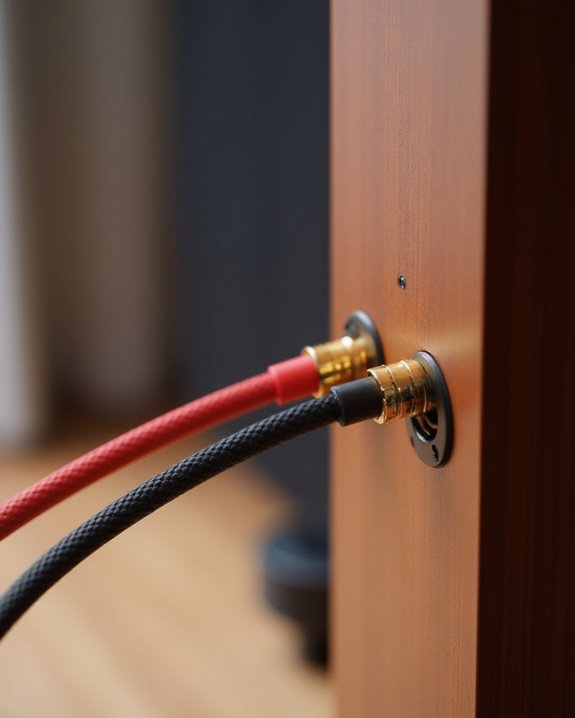
With proper equipment selected, audiophiles can now begin the step-by-step process of connecting their speakers using the bi-wiring method. Safety must come first in any DIY AUDIO project, requiring all equipment to be powered off and unplugged before proceeding. The next vital step involves removing the metal jumpers between the two sets of terminals, effectively separating the high and low frequency sections for independent signal paths.
Enthusiasts should connect identical speaker cables to both terminal pairs, carefully maintaining the red and black polarity consistency across all connections. Each binding post requires secure attachment, with positive terminals receiving the red wire and negative terminals accepting the black wire. Make sure all connections are tight and free of stray wire strands that could cause short circuits, compromising the intimate soundstage bi-wiring aims to create.
Recommended Products
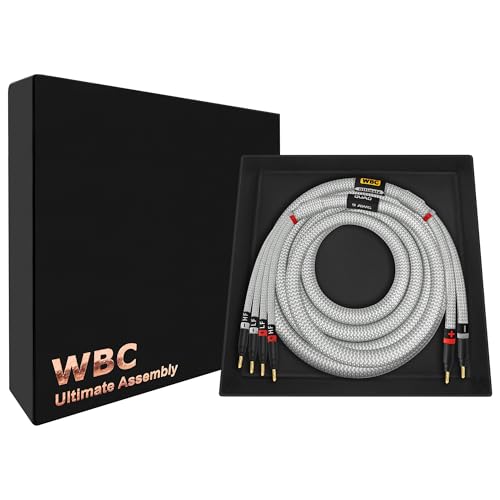
“WBC – Ultimate Assembly Range” is a direct result of popular demand by our valued customers, which takes our already excellent cable solutions a step further. With an industry-leading total of 2688, 99.99% Ultra-Pure Oxygen Free Copper (OFC), 0.08mm ultra-fine strands, this heavy gauge cable will effortlessly deliver deeper lows, sweet mids and higher highs without any fear of signal loss. Satisfying all the most stringent requirements of the most demanding audiophile.
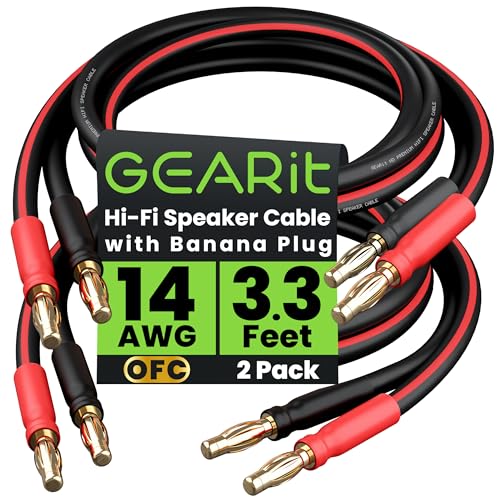
SPEAKER WIRE WITH BANANA PLUGS - Our GearIT 14AWG banana plug speaker wire is made from pure copper oxygen free speaker cable with speaker plugs. High quality and premium banana plug wire designed for home stereo, center channel speakers, subwoofer, and sound systems.

Total Length: 5M(16.4ft) PER Wire /OFC Cable
Comparing Single-Wire vs. Bi-Wire Performance
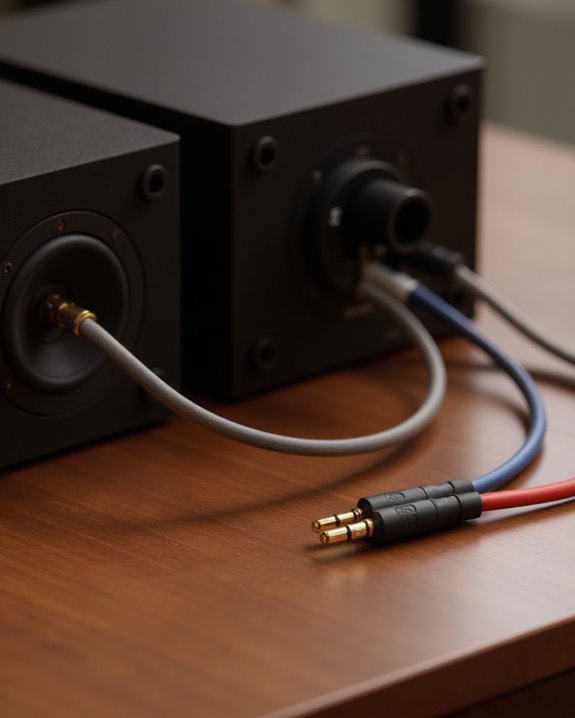
When audiophiles debate the merits of different speaker wiring configurations, the comparison between single-wire and bi-wire performance often reveals both objective measurements and subjective experiences. Testing shows that bi-wiring can provide subtle improvements in clarity and resolution by reducing interference from bass signals, creating a more precise three-dimensional soundstage that many enthusiasts seek.
For the best sonic results, replacing stock jumpers with high-quality interconnects and speaker cables often yields noticeable improvements, making bi-wiring worth trying for discerning listeners. However, internally bi-wired cables deliver approximately 90 percent less effectiveness than proper separate-run configurations due to magnetic field interactions. The greatest bang for the buck comes from bi-wiring with identical wires on capable speakers, which can reveal inadequacies in original speaker cables while allowing customized tonal signatures and improved imaging.
Recommended Products

Complete Car Amp Wire Setup: Complete 8-gauge wiring kit for car audio amplifier installation; 20, 4-inch wire ties; 3 rubber grommets; Ideal set for customizing your car's audio upgrade

IN THE BOX: 16 gauge speaker wire cable (100 feet)
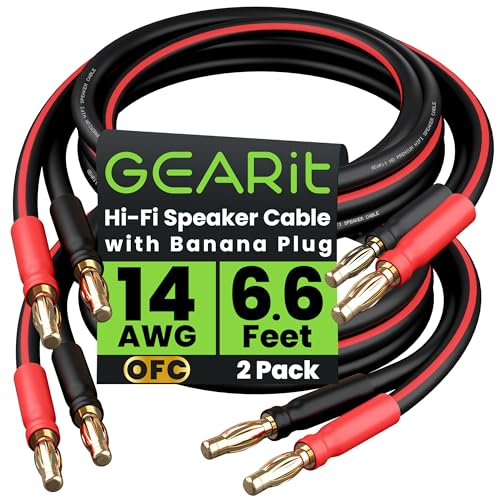
SPEAKER WIRE WITH BANANA PLUGS - Our GEARit 14AWG banana plug speaker wire is made from pure copper oxygen free speaker cable with speaker plugs. High quality and premium banana plug wire designed for home stereo, center channel speakers, subwoofer, and sound systems.
Troubleshooting Common Bi-Wiring Issues
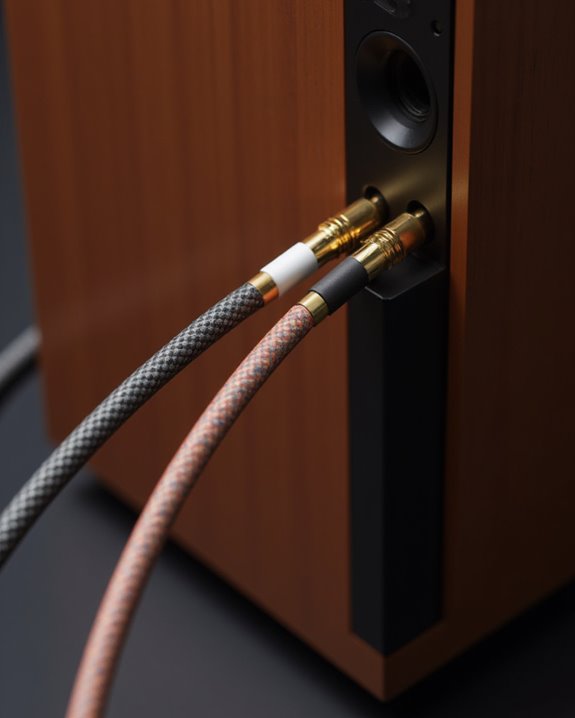
Even perfectly executed bi-wiring setups can encounter problems that diminish performance benefits or create new audio issues. When distorted or muddy sound occurs, make sure to separate bass and mid/high frequency cables by at least 4 inches to reduce magnetic interference that modulates signals. Verify that the amplifier end connections have proper polarity, with red wires connected to red binding posts and black to black on both sets.
Short circuits represent a common failure point, so check that positive and negative terminals aren’t touching. When using one brand of cable for treble and another for bass, inconsistent performance often results. If cables are bundled with zip-ties, try unbundling them to assess whether poor shielding affects sound quality. Always confirm identical cable specifications (brand, model, length) when troubleshooting performance issues, as mismatches create uneven signal transmission. After resolving any connection issues, it is good practice to test each speaker cable individually with a multimeter to confirm proper continuity before powering the system back on.
Alternatives: Jumper Cables and Shotgun Configurations
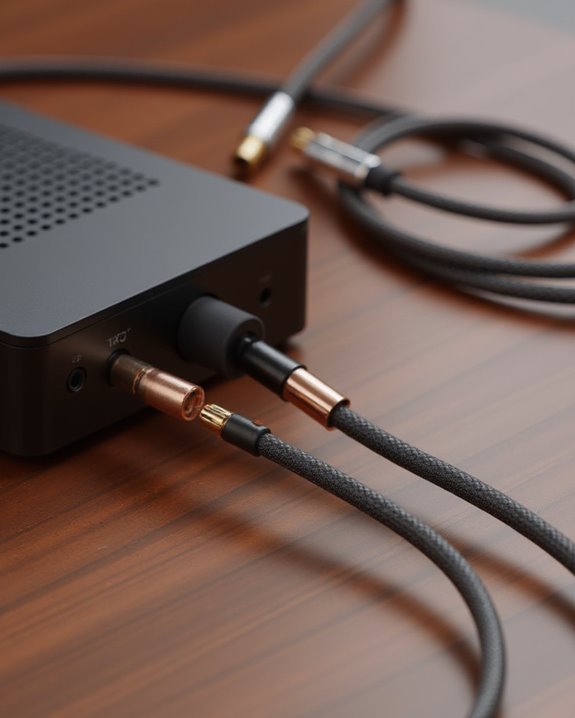
Bi-wiring enthusiasts who prefer not to invest in completely new cable setups have two practical alternatives that deliver many of the same acoustic benefits at lower cost and complexity. High-quality jumper cables, typically costing around $95, can effectively replace the standard metal straps that come with speakers, with many home theater enthusiasts reporting significant sonic improvements when using cable material that matches their existing speaker wire.
For those still using conventional setups but seeking enhanced performance, shotgun configurations offer another solution by physically separating high and low-frequency cables by at least 4 inches, minimizing magnetic interference. Audiophiles can make custom jumpers using silver-plated wire and quality connectors for under $100, creating a cost-effective upgrade path that preserves the advantages of bi-wiring without requiring a complete system overhaul.
Frequently Asked Questions
How to Wire Bi-Wire Speakers?
Bi-wiring speakers requires proper wire preparation, careful terminal attachment after removing jumpers, identical cable selection for bass and treble sections, and essential safety measures like powering down equipment before making intimate connections between components.
Does Bi-Wiring a Speaker Make a Difference?
Bi-wiring speakers sparks quite the Audio Debate. Evidence suggests mixed results regarding Effectiveness Analysis. Some listeners report enhanced Signal Integrity and improved Quality Perception, particularly when cables are properly separated rather than bundled together.
Can You Bi-Amp a Speaker With One Set of Terminals?
No, bi-amping requires two separate sets of terminals. Terminal constraints make it physically impossible with single-terminal speakers. Listeners seeking enhanced intimacy should explore setup alternatives like quality single-amp connections rather than facing bi-amp drawbacks.
Does Bi-Wiring Improve Bass?
Bi-wiring often enhances bass improvement by reducing interference between frequency bands. This separation can deepen subwoofer effects while improving overall frequency response. Many listeners report increased audio clarity and tighter, more defined low-end performance.